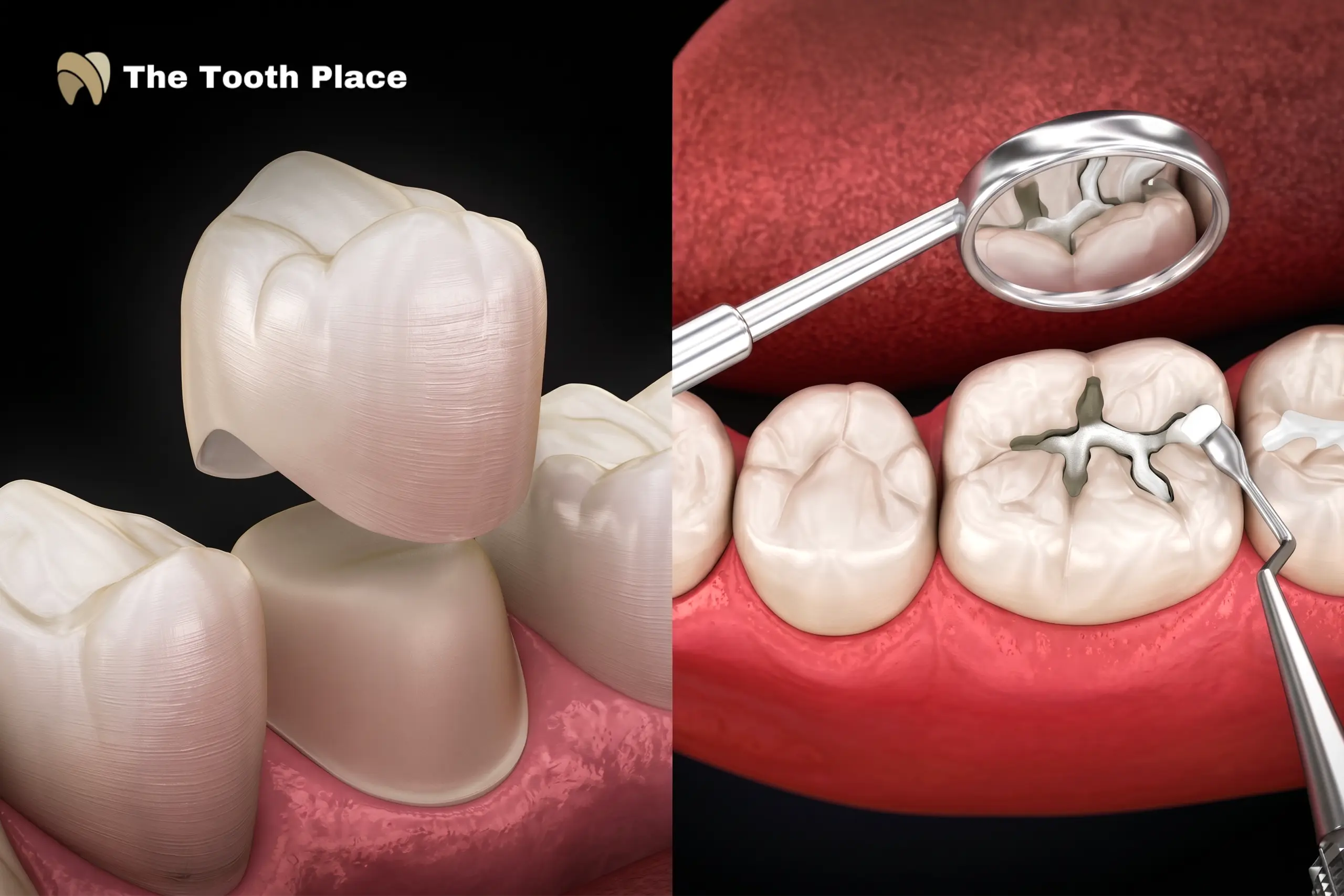
A filling repairs a small or medium area of damage, while a crown covers and protects a tooth that has lost too much structure to hold a filling safely. The deciding factor is usually how many healthy teeth are left.
If you’ve been told you need a crown and expected a filling, you’re not alone in wondering why. Crowns take longer and cost more, so it’s fair to want to understand the reasoning.
This guide compares the two side by side, explains how dentists make the call and lists the signs that a filling has reached its limit. By the end, you’ll know what questions to ask at your next appointment.
Crown vs Filling: The Quick Comparison
Factor | Filling | Crown |
|---|---|---|
What it does | Fills a hole left after decay is removed | Covers the whole visible tooth like a cap |
Best for | Small to medium cavities and chips | Large cavities, cracks, weak or root canal–treated teeth |
Tooth structure removed | Only the decayed or damaged part | Outer layer trimmed on all sides |
Number of visits | Usually one | Usually two (some clinics offer same-day crowns) |
Typical lifespan | Often 5–10+ years, depending on size and material | Often 10–15+ years with good care |
Protection from cracking | Limited, especially when large | Strong, because it holds the tooth together |
Cost factors | Lower; depends on size and number of surfaces | Higher; depends on material and lab work |
Neither option is better in every case. The right choice depends on the tooth in front of your dentist.
What Is a Dental Filling?
A filling replaces the part of a tooth lost to decay or minor damage. After numbing the area, your dentist removes the decay, cleans the space and fills it with a restorative material.
Common filling materials include:
- Composite resin: tooth-coloured, bonded to the tooth, popular for visible areas
- Amalgam (silver): very durable, used less often today for appearance reasons
- Glass ionomer: releases fluoride, often used near the gumline or in children
- Ceramic inlays and onlays: lab-made, partway between a filling and a crown
The Canadian Dental Association notes that there are several types of fillings and that the final decision on which one goes in your mouth is yours. Our team will explain which dental fillings in Bolton suit your tooth and talk through the trade-offs.
What Is a Dental Crown?
A crown is a custom cap that fits over the entire visible part of a tooth. It restores the tooth’s shape, protects it from breaking and lets you chew normally again.
Crowns can be made from:
- All-ceramic or porcelain, for a natural look
- Zirconia, which is very strong and tooth-coloured
- Porcelain fused to metal, combining strength and appearance
- Gold or other metal alloys, very durable for back teeth
To place a crown, your dentist shapes the tooth, takes an impression and fits a temporary crown. The permanent crown is cemented at a second visit. Digital scanning, such as iTero digital impressions in Bolton, can replace messy impression trays with a quick 3D scan.
When a Filling Is Enough
A filling is usually the right choice when:
- The cavity is small to medium in size.
- Most of the tooth’s outer walls (cusps) are intact.
- There are no cracks running through the tooth.
- The tooth hasn’t had a root canal (in back teeth especially).
- An older filling can be replaced without weakening what’s left.
Dentists aim to keep as much natural tooth as possible. If a filling will do the job well, there’s no reason to remove more tooth for a crown.
Also Read: Emergency Tooth Extraction: When Is Removing a Tooth the Best Option?
When You Need a Crown Instead of a Filling
A crown is usually recommended when the tooth can no longer hold itself together. Common situations include:
Situation | Why a crown helps |
|---|---|
Very large cavity | Too little tooth left to support a filling |
Cracked tooth | A crown holds the pieces together and limits the crack spreading |
Broken cusp | Rebuilds the missing wall and protects the rest |
Old, large filling failing | Replacing it again would leave thin, fragile walls |
Back tooth after a root canal | Treated teeth are more brittle and prone to fracture |
Heavy grinding or clenching | Spreads biting force across the whole tooth |
Badly worn tooth | Restores height and shape |
Think of it this way: a filling is a patch, while a crown is a helmet. Once a tooth needs more support than a patch can give, a crown protects it from bigger damage
Crowns After Root Canal Treatment
A tooth that has had a root canal no longer has a living nerve, and back teeth in particular become more brittle afterwards. That’s why root canal treatment in Bolton is often followed by a crown on molars and premolars. Front teeth with little damage may only need a filling.
Signs a Filling Is No Longer Enough
Your mouth often gives warning signs before a filling fails completely. Watch for:
- Sharp pain when you bite down, especially on one cusp
- Sensitivity to cold that lingers after the cold is gone
- A visible crack line on a tooth with a large filling
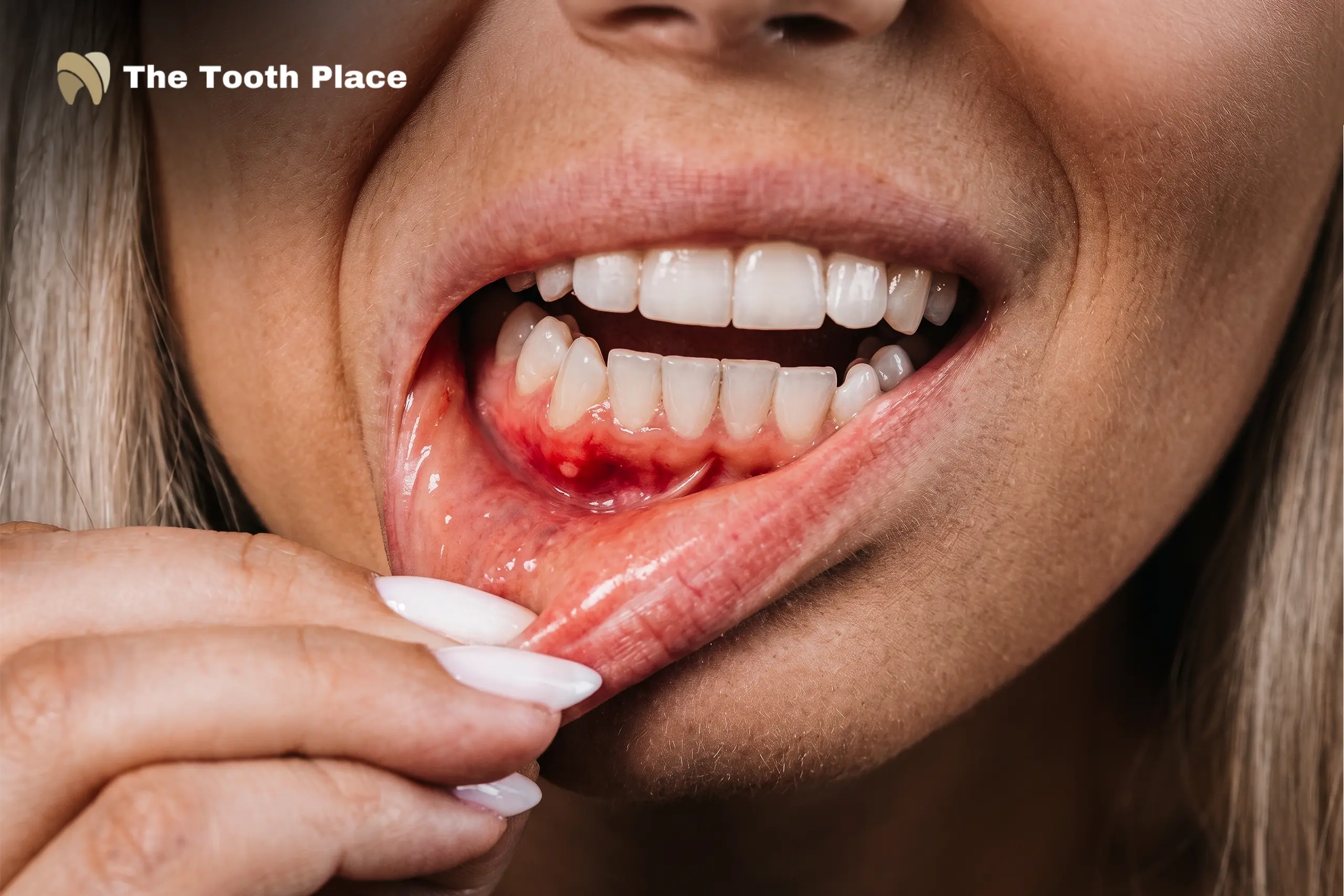
- A piece of tooth or filling breaking off
- Food catching around an old filling
- A dark shadow showing through enamel near a filling
- Rough edges your tongue keeps finding
If you notice any of these, book a checkup. Catching a cracked tooth early can be the difference between a crown and losing the tooth.
Large Filling vs Crown: The "Repeat Filling" Cycle
Each time a filling is replaced, a little more tooth is removed. After two or three rounds, the remaining walls can be thin and prone to cracking.
Stage | What happens |
|---|---|
First filling | Small, conservative repair |
Filling replaced | Slightly larger, some extra tooth removed |
Filling replaced again | Large filling, thin walls left |
Next step | Crack risk rises; a crown protects what remains |
If cracked below the gum | The tooth may need a root canal or extraction |
This is why a dentist may suggest a crown on a tooth that “only” needs its old filling redone. The aim is to stop the cycle before the tooth breaks.
What Each Procedure Feels Like
Getting a Filling
- Local anaesthetic numbs the area
- Decay is removed and the tooth is prepared
- Filling material is placed and shaped
- Your bite is checked and adjusted
- Most fillings take under an hour
Getting a Crown
- Visit one: numbing, tooth shaping, impression or scan, temporary crown
- Between visits: the lab makes your crown, usually over one to three weeks
- Visit two: temporary removed, permanent crown checked and cemented
Mild sensitivity after either procedure is common and usually settles within a few days.
Cost and Insurance: What Affects the Price
There’s no single price for a crown or a filling, because cost depends on the tooth and the material. These are the factors that affect your final cost:
- Number of tooth surfaces involved in a filling
- Filling material chosen
- Crown material and lab fees
- Whether a build-up or root canal is needed first
- How your dental plan classifies the treatment
Most plans cover fillings as basic care and crowns as major care, often at a lower percentage. Ask us for a predetermination before crown treatment so you know your share. If there’s a balance, we can talk you through dental payment plans in Bolton.
Also Read: 7 Dental Emergencies That Need an Emergency Dentist in Bolton
How to Make Your Filling or Crown Last
- Brush twice a day with fluoride toothpaste, paying attention to the gumline.
- Floss daily, especially around crown edges where decay can start.
- Avoid chewing ice, hard candy and pens.
- Wear a night guard if you grind your teeth.
- Keep regular checkups so small problems are caught early.
If a filling or crown breaks or falls out, keep any pieces and call your dentist promptly. A sudden broken tooth emergency in Bolton is often easier to fix when seen quickly.
Get a Clear Answer for Your Tooth
The only way to know whether you need a crown or a filling is an exam and, often, an X-ray. At The Tooth Place, we’ll show you what we see and explain the options before any treatment begins.
Book an appointment with our Bolton team to find out what your tooth needs.
Frequently Asked Questions
1. How do I know if I need a crown or a filling?
It depends on how much healthy tooth is left. Small to medium cavities usually need a filling, while large cavities, cracks or teeth treated with a root canal usually need a crown.
2. Is a crown better than a filling?
Not always. A crown protects a weak tooth better, but a filling keeps more natural tooth, so it's the better choice when the damage is small.
3.Can I get a filling instead of a crown?
Sometimes, if enough tooth structure remains. If the tooth is cracked or very weak, a filling alone may fail and the tooth could break.
4. How long does a filling last compared to a crown?
Fillings often last 5 to 10 years or more, depending on size and material. Crowns often last 10 to 15 years or longer with good care.
5. Does getting a crown hurt?
The tooth is numbed with local anaesthetic, so the procedure itself should not be painful. Some sensitivity for a few days afterwards is common.
6.Why does my dentist recommend a crown for a tooth that doesn't hurt?
Cracks and large old fillings often cause no pain at first. A crown can protect the tooth before it breaks and needs bigger treatment.
7. Do all teeth need a crown after a root canal?
No. Back teeth usually do, because they become brittle and take heavy biting force. Front teeth with little damage may only need a filling.
8. Does insurance cover crowns?
Many plans cover crowns as major services, often at around 50%. A predetermination tells you exactly what your plan will pay.