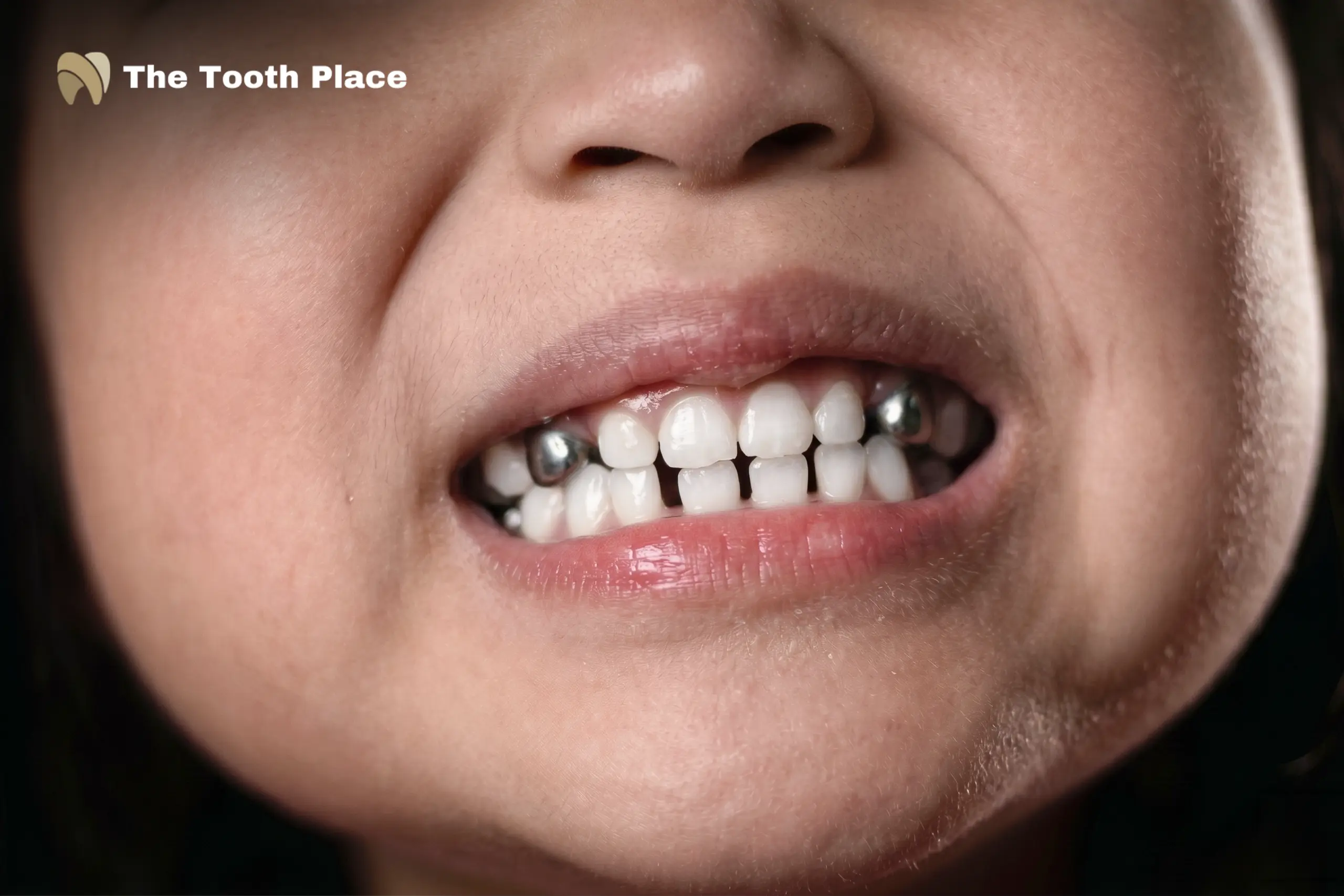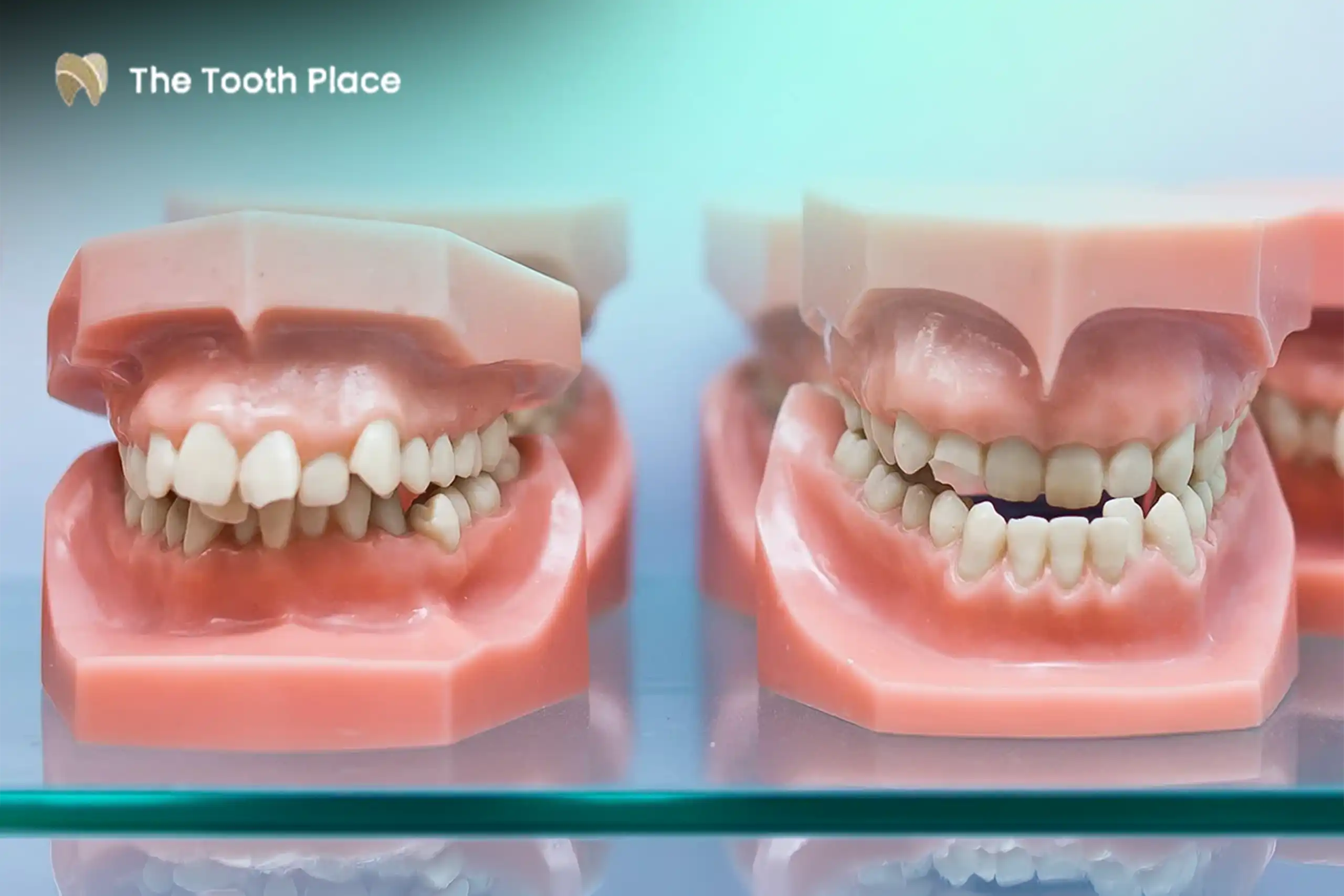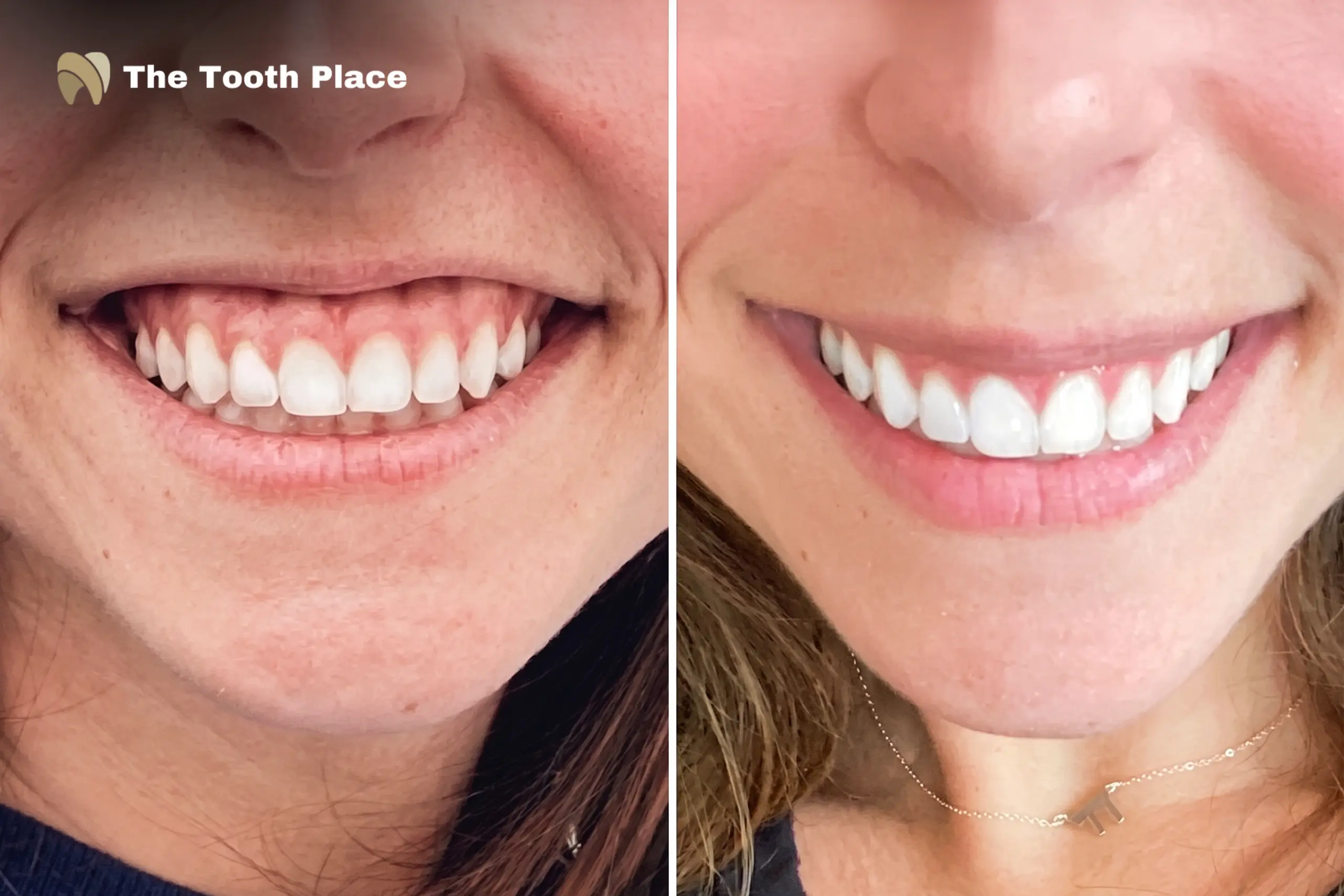
A gummy smile means more gum shows than usual when you smile, typically more than 3 to 4 mm above your upper teeth. It’s usually harmless to your health, and it can be treated with options ranging from laser gum contouring to orthodontics, depending on the cause.
Plenty of people feel self-conscious about a gummy smile. Some cover their mouth in photos or practise a tight-lipped smile. If that sounds like you, you’re far from alone.
This guide explains what counts as a gummy smile, the five main causes, the treatments that match each one and what recovery looks like. The most important point comes first: the right treatment depends on the cause, so a proper assessment always comes before any fix
What Counts as a Gummy Smile?
According to the clinical review Excessive Gingival Display on NCBI, showing 1 to 2 mm of gum when smiling is considered normal. Definitions vary, but a gum display of more than 3 to 4 mm is generally described as a gummy smile.
Gum showing when you smile | How it’s usually described |
|---|---|
0 mm (lip covers gums) | Low smile line |
1–2 mm | Normal, often seen as youthful |
3–4 mm | Borderline; some people notice it, some don’t |
More than 4 mm | Gummy smile (excessive gingival display) |
8 mm or more | Often linked to jaw position |
Gummy smiles are common. One frequently cited study found excessive gum display in about 14% of women and 7% of men.
5 Common Causes of a Gummy Smile
Most gummy smiles have one main cause, though some have two or more working together.
1. Short Clinical Crowns (Altered Passive Eruption)
Your teeth may be a normal size, but extra gum tissue covers part of them. As adult teeth come in, the gum normally moves up to its final position. Sometimes it doesn’t, leaving teeth looking short and square.
2. Hyperactive or Short Upper Lip
Some upper lips rise higher than average when smiling, or are naturally shorter. The teeth and gums are normal, but the lip lifts further and shows more gum.
3. Vertical Jaw Position (Vertical Maxillary Excess)
When the upper jaw has grown longer than usual from top to bottom, the gums sit lower relative to the lips. This often shows as a long lower face and a large amount of gum display.
4. Over-Erupted Front Teeth
Upper front teeth can drift down over time, often with a deep bite or tooth wear. The gums follow the teeth, so more gum shows.
5. Swollen or Overgrown Gums
Gum inflammation, braces that make cleaning harder and some medications can cause the gums to enlarge. This type often improves once the underlying cause is managed.
Also Read: What Does a Cosmetic Dentist in Bolton Do? 7 Treatments to Consider
Matching the Treatment to the Cause
Cause | Common treatment options | Invasiveness |
|---|---|---|
Short clinical crowns | Laser gum contouring; crown lengthening if bone is involved | Low to moderate |
Hyperactive upper lip | Botulinum toxin injections; lip repositioning | Low to moderate |
Over-erupted front teeth | Orthodontics, sometimes with gum contouring | Moderate, over months |
Swollen gums | Cleaning, gum treatment, medication review, then contouring if needed | Low |
Vertical jaw excess | Orthodontics plus jaw surgery in significant cases | High |
A treatment that suits one cause may do little for another. For example, trimming gums won’t help if the real cause is the upper jaw’s position.
Gummy Smile Treatment Options Explained
Laser Gum Contouring (Gingivectomy)
A dental laser gently removes and reshapes excess gum tissue to show more of each tooth. Lasers seal the tissue as they work, which typically means less bleeding and often less discomfort than a scalpel.
It’s best suited to cases where extra gum covers otherwise normal teeth. We offer laser gum contouring in Bolton, and our dentists will check whether your gum and bone levels make it a suitable choice.
Crown Lengthening
If bone sits too close to the gumline, removing gum alone can lead to the tissue growing back. Crown lengthening reshapes both gum and a small amount of bone to create a stable, longer-looking tooth.
Botulinum Toxin Injections
Small injections can relax the muscles that lift the upper lip, so it rises less when you smile. Results are temporary, usually lasting a few months, and treatment must be repeated to maintain them.
Lip Repositioning
A minor surgical procedure limits how high the upper lip can lift. It’s an option for some patients with a hyperactive lip who want a longer-lasting result than injections, although some relapse can occur over time.
Orthodontic Treatment
If over-erupted teeth or bite issues are the cause, moving teeth into a better position can reduce gum display. Clear aligners such as Invisalign treatment in Bolton may be an option for suitable cases.
Jaw Surgery
For significant vertical jaw excess, orthodontics combined with jaw surgery may be recommended. This is a major treatment, and your dentist would refer you for an oral surgery consultation or to a specialist to discuss it.
Veneers or Crowns After Contouring
Sometimes teeth also look short because of wear. After gum contouring, porcelain veneers in Bolton can help restore balanced tooth proportions.
What to Expect From Laser Gum Contouring
Laser gum contouring is a common gummy smile treatment for patients whose teeth look short because of extra gum. Here’s how it typically goes:
- Assessment. Your dentist measures gum display, checks bone levels with X-rays and talks through your goals.
- Planning. The new gumline is marked so you can see the planned change.
- Numbing. Local anaesthetic keeps you comfortable.
- Reshaping. The laser removes and sculpts tissue along the gumline.
- Review. You check the result in a mirror before you leave.
Recovery Timeline
Time after treatment | What’s typical |
|---|---|
First 24 hours | Mild tenderness; soft foods recommended |
Days 2–3 | Gums may look red or white as they heal |
Week 1 | Most discomfort has eased; normal eating resumes |
Weeks 2–4 | Gums continue to firm up and settle |
Around 3 months | Final gumline shape is easier to judge |
Your dentist will give you aftercare instructions, which usually include gentle brushing, avoiding spicy or crunchy foods for a few days and rinsing as directed.
Also Read: Professional Teeth Whitening in Bolton: What Results Can You Expect?
Is a Gummy Smile a Health Problem?
On its own, a gummy smile isn’t harmful. It becomes a health matter when the extra gum is caused by inflammation or overgrowth, because swollen gums can trap plaque and lead to gum disease.
See your dentist if you notice:
- Gums that bleed easily when you brush
- Gums that have grown over more of your teeth than before
- Tenderness, redness or bad breath
- Gum changes after starting a new medication
Questions to Ask Before Gummy Smile Treatment
- What is causing my gummy smile?
- Is one treatment enough, or will I need a combination?
- Will the result be permanent or temporary?
- How long is recovery, and how much time should I take off?
- What could happen if the gum grows back?
- Is any part of this covered by my dental plan?
Cosmetic gum contouring is usually not covered by insurance, although treatment for gum overgrowth may be. Your dentist can explain the options and costs before you decide.
Exploring Your Smile Options at The Tooth Place
Every smile is unique, and so is the reason behind a gummy smile. At The Tooth Place, we start with a careful assessment, explain the cause and talk through the options that fit your goals.
You can see examples of smile transformations in Bolton, learn about our wider smile makeover options or book a consultation with our team.
Frequently Asked Questions
1. What is a gummy smile?
A gummy smile is when more than about 3 to 4 mm of gum shows above the upper teeth when you smile. Showing 1 to 2 mm is considered normal.
2. What causes a gummy smile?
Common causes include extra gum covering the teeth, a short or very active upper lip, the position of the upper jaw, over-erupted front teeth and swollen gums.
3. How do you fix a gummy smile?
Treatment depends on the cause. Options include laser gum contouring, crown lengthening, injections to relax the lip, lip repositioning, orthodontics and, in significant cases, jaw surgery.
4. Is laser gum contouring painful?
The area is numbed, so the procedure itself shouldn't be painful. Most people have mild tenderness for a few days afterwards.
5. Is gum contouring permanent?
Gum contouring is usually long-lasting when the cause is extra gum tissue and bone levels are correct. If bone sits too close to the gumline, crown lengthening may be needed to prevent regrowth.
6. How long does it take to heal after gum contouring?
Most discomfort settles within about a week. The gumline continues to firm up over several weeks, with the final shape clearer at around three months.
7. Can braces or Invisalign fix a gummy smile?
They can help when over-erupted teeth or bite problems cause the gummy smile. They won't change a gummy smile caused mainly by the lip or by extra gum tissue.
8. Does insurance cover gummy smile treatment?
Cosmetic gum reshaping is usually not covered. Treatment for gum overgrowth or gum disease may be, so check your plan or ask our team.