Yes, dental X-rays are considered safe for most people. With modern digital equipment, a set of four bitewing X-rays delivers about 0.005 millisieverts (mSv) of radiation, roughly what the average Canadian receives from nature in a single day.
Still, “radiation” is a word that makes people pause, and that’s reasonable. You deserve to know what you’re agreeing to, why it’s needed and how your dental team keeps the dose low.
This guide compares the doses of common dental X-rays, explains how often you actually need them and covers special cases such as pregnancy and children. You’ll also learn why skipping X-rays can cost you more than it saves.
The Short Answer: How Much Radiation Is in a Dental X-Ray?
Radiation dose is measured in millisieverts (mSv). The Canadian Nuclear Safety Commission reports that Canadians receive an average of 1.8 mSv a year from natural background radiation. That comes from soil, rocks, food, radon and cosmic rays, and it works out to about 0.005 mSv a day.
Here’s how common dental images compare:
Type of X-ray | What it shows | Approximate dose | Same as natural background for |
|---|---|---|---|
Single bitewing or periapical | One area of teeth and bone | About 0.002–0.01 mSv | Under 1 day to about 2 days |
Set of 4 bitewings | Back teeth and areas between them | About 0.005 mSv (digital, rectangular beam) to 0.04 mSv (round beam) | About 1 day to 1 week |
Panoramic (OPG) | Whole jaw, all teeth, sinuses, joints | About 0.01–0.02 mSv | About 2–4 days |
Full-mouth series | Every tooth in detail | About 0.035–0.17 mSv | About 1–5 weeks |
Cone beam CT (3D) | Bone volume, nerves, impacted teeth | Varies widely with scan size | Days to several months |
Doses vary with the machine, the shape of the beam, settings and image size, so treat these as ranges rather than exact numbers. The pattern is clear, though: routine dental X-rays sit at the very low end of medical imaging.
Why Your Dentist Needs X-Rays at All
A visual exam only shows the outside of your teeth. Much of what causes pain and tooth loss starts where no one can see it.
X-rays help your dentist find:
- Cavities between teeth, where two teeth touch
- Decay under old fillings and crowns
- Bone loss from gum disease
- Infections and abscesses at the root tip
- Impacted or crowded teeth, including wisdom teeth
- Cysts, growths and other changes in the jawbone
- How a child’s adult teeth are developing below the gums
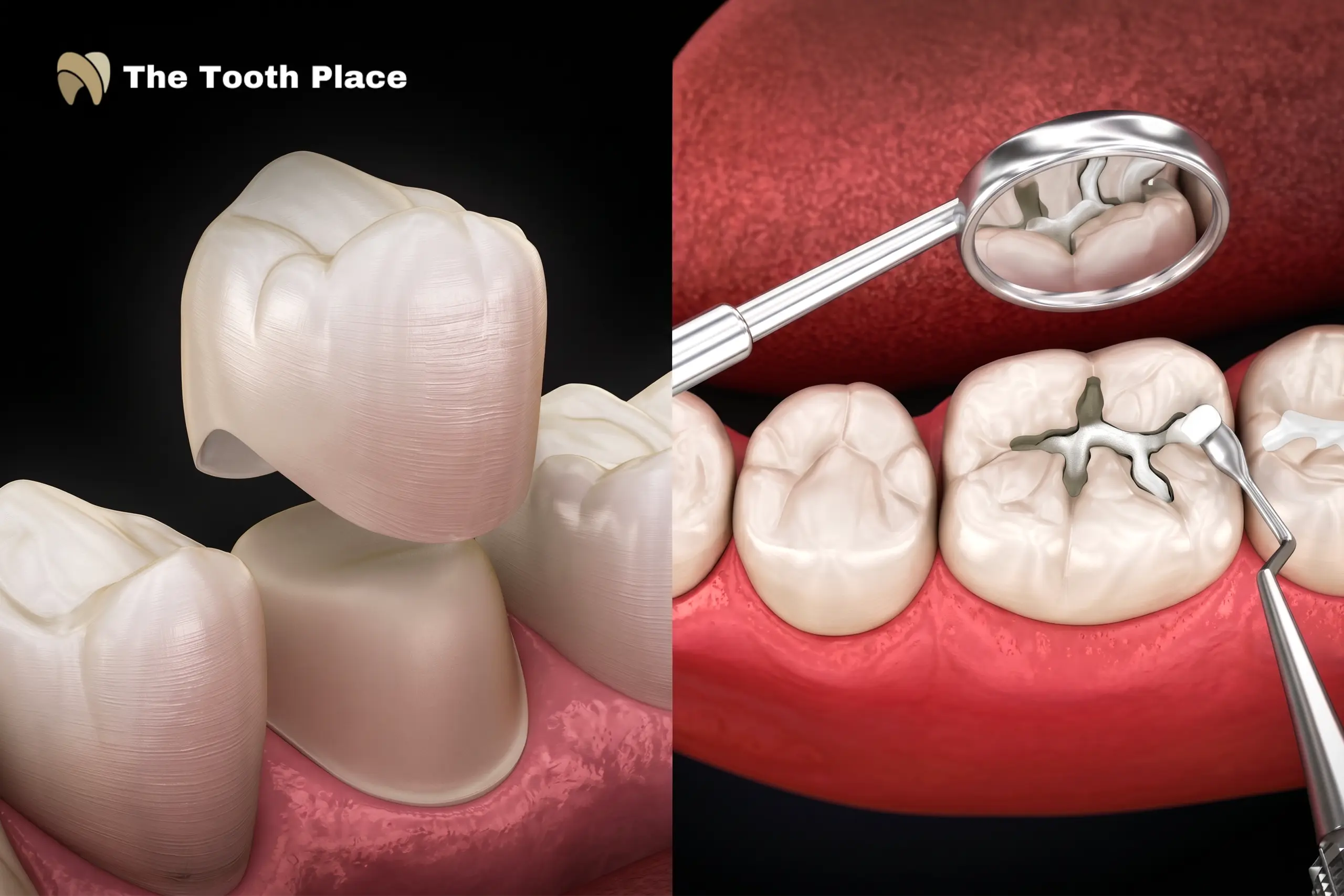
A small cavity found early can often be fixed with a simple filling. The same cavity found a year later, after it reaches the nerve, may need a root canal and a crown.
Also Read: What Should You Look for in a Dental Clinic in Bolton?
Types of Dental X-Rays Explained
Not every visit needs every type of X-ray. Your dentist picks the image that answers a specific clinical question.
Bitewing X-Rays
You bite on a small tab while the image captures your upper and lower back teeth together. Bitewings are the main tool for finding cavities between teeth and checking bone levels.
Periapical X-Rays
These show one or two teeth from crown to root tip. They’re used when a tooth hurts, when an infection is suspected or during treatment such as a root canal.
Panoramic X-Rays
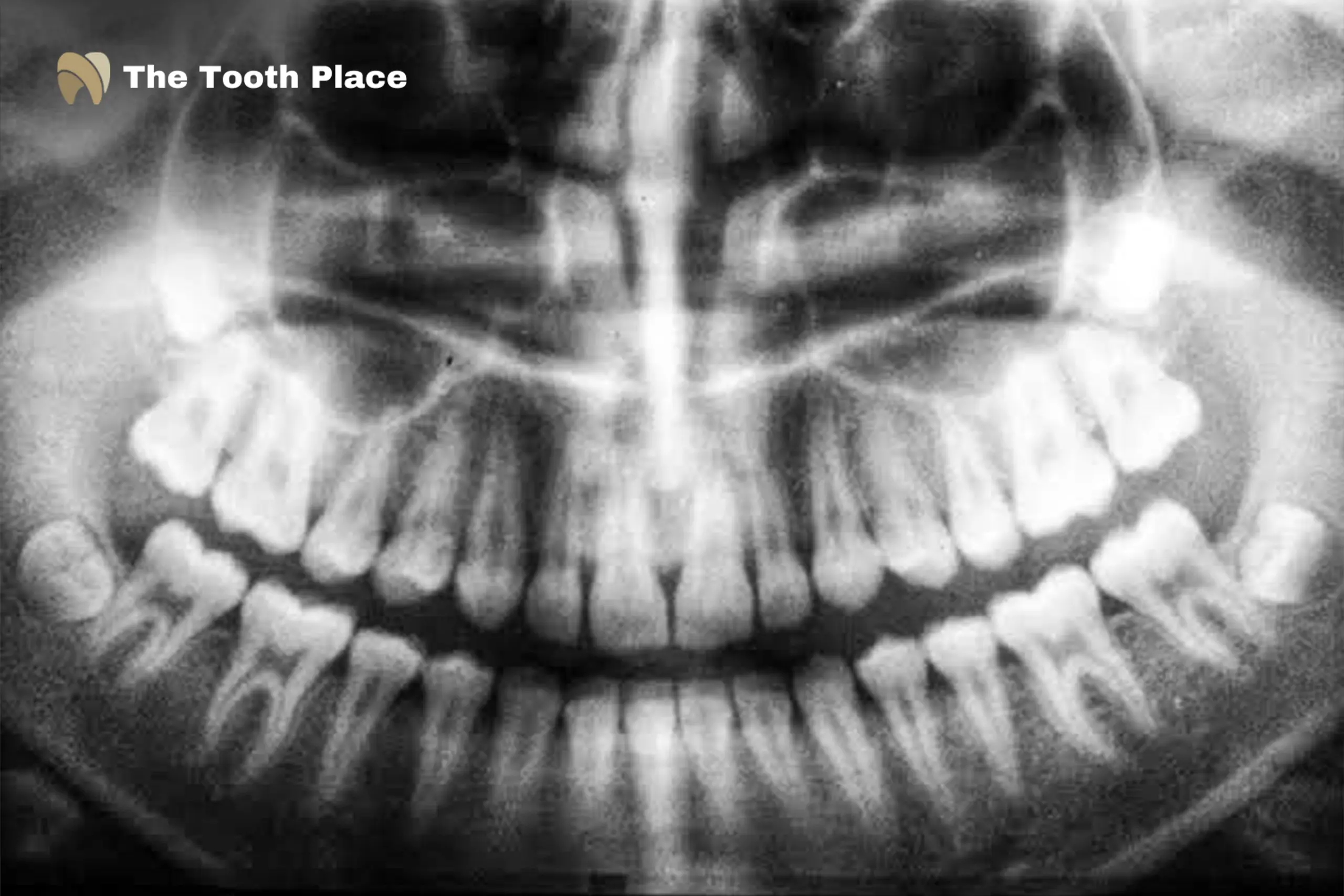
The machine rotates around your head and captures your whole mouth in one image. It’s useful for wisdom teeth, jaw problems, orthodontic planning and new patients with complex histories.
Cone Beam CT (3D Imaging)
A 3D scan shows bone height, width and the exact position of nerves. It’s reserved for cases that truly need it, such as implant planning or a deeply impacted tooth.
Digital vs Traditional Film X-Rays
Most modern clinics, including ours, use digital sensors. Digital imaging generally needs less radiation than older film and gives your dentist a clearer picture to work with.
Feature | Digital X-rays | Traditional film |
|---|---|---|
Radiation needed | Lower | Higher |
Image ready | In seconds | After chemical processing |
Zoom and contrast | Yes, on screen | No |
Easy to share with a specialist | Yes, electronically | Physical copy needed |
Chemical waste | None | Developer and fixer chemicals |
You can learn more about the low radiation dental X-rays in Bolton we use, along with our other imaging tools.
How Often Do You Really Need Dental X-Rays?
There’s no fixed schedule that applies to everyone. In Canada, dental X-rays are meant to be taken based on clinical need, not out of routine. Your dentist looks at your history, your risk of decay and gum disease, and any symptoms.
Patient | Typical approach |
|---|---|
New patient | X-rays to set a baseline, unless recent images are available from a previous dentist |
Adult with low cavity risk | Bitewings less often, sometimes every 2–3 years |
Adult with high cavity risk or gum disease | Bitewings more often, as needed to monitor change |
Child or teen | More often than adults, because teeth and jaws change quickly |
Anyone with pain, swelling or trauma | Targeted X-rays of the problem area |
If you’ve had X-rays at another clinic recently, ask for copies to be sent over. That can help avoid repeat images. When you book a dental exam and X-rays in Bolton as a new patient, our team will ask about your previous images.
How Your Dental Team Keeps Your Dose Low
Dental X-ray equipment in Canada is regulated under federal rules, and its installation and use are regulated by the provinces. Clinics follow the principle of keeping doses as low as reasonably achievable.
In practice, that means:
- Taking X-rays only when they will change a diagnosis or treatment decision
- Using digital sensors and modern, regularly inspected machines
- Setting exposure to the patient’s size, with lower settings for children
- Using rectangular collimation and positioning devices to limit the beam to the area needed
- Avoiding retakes through careful positioning
- Reviewing images you already have from other clinics
Dental X-Rays During Pregnancy
Dental X-rays aim at the mouth, far from the abdomen. The dose reaching the baby from a dental image is extremely small.
Even so, Canadian guidance takes a careful approach:
- Elective X-rays can usually wait until after the pregnancy.
- X-rays needed for urgent care, such as a painful infection, should not be avoided. A dental infection left untreated can be a bigger risk to you and your baby than the X-ray.
- Always tell your dental team if you are pregnant or might be.
Your dentist will take the fewest images needed to make a safe diagnosis.
Are Dental X-Rays Safe for Children?
Children are more sensitive to radiation than adults, so dentists are especially careful with them. Child-specific exposure settings and smaller sensors keep doses lower still.
X-rays are also more valuable for children, because cavities in baby teeth spread quickly and adult teeth are forming below the gums. A well-timed image can catch crowding, missing adult teeth or early decay before they become bigger problems. Our dental checkup for kids in Bolton includes X-rays only when your child’s dentist sees a reason for them.
Also Read: Your Child’s First Dental Visit: When to Go and What to Expect
What Happens If You Refuse Dental X-Rays?
You have the right to decline any test. Before you do, it helps to understand the trade-off:
- Cavities between teeth may go undetected until they hurt.
- Infections at the root tip can grow silently.
- Bone loss from gum disease may not be caught early.
- Your dentist may not be able to safely recommend some treatments without images.
For example, assessing impacted wisdom teeth in Bolton is not possible without an X-ray, because the tooth sits under the gum and bone. The same is true for diagnosing a hidden abscess before tooth infection treatment.
If you have concerns, talk them through with your dentist. Often the answer is fewer, targeted images rather than none at all.
Questions to Ask at Your Next Visit
- Why do I need this X-ray today?
- What type of image is it, and what will it show?
- When were my last X-rays taken?
- Can you use images from my previous dentist?
- Do I need a thyroid collar or apron for this image?
Ask Us About Your X-Rays
At The Tooth Place, our dentists explain why each X-ray is recommended and what it shows. You’ll see your images on screen, so you can understand your own mouth as well as we do.
Have questions about imaging, or due for a checkup? Contact our Bolton team to book a visit.
Frequently Asked Questions
1. Are dental X-rays safe?
Yes, for most people. With modern digital equipment, a set of four bitewings delivers about 0.005 mSv, roughly the same as one day of natural background radiation in Canada.
2. How does dental X-ray radiation compare to everyday exposure?
A set of four bitewings is about 0.005 mSv, while Canadians receive about 1.8 mSv a year from nature. With modern digital equipment, one bitewing set equals roughly a single day of everyday exposure; older set-ups deliver about a week's worth.
3. How often should I get dental X-rays?
It depends on your risk of cavities and gum disease. Low-risk adults may need bitewings only every couple of years, while children and higher-risk patients need them more often.
4. Can I get dental X-rays while pregnant?
Elective X-rays can usually wait until after pregnancy. X-rays needed for urgent care should not be avoided, and you should always tell your dental team you are pregnant.
5. Are digital X-rays safer than film?
Digital X-rays generally need less radiation than traditional film. They also produce images instantly and allow your dentist to zoom in on details.
6. Why do I need X-rays if my teeth don't hurt?
Many problems, such as cavities between teeth and early bone loss, cause no pain at first. X-rays find them while treatment is still small and simple.
7. Is a panoramic X-ray more radiation than bitewings?
It depends on the equipment. A panoramic X-ray is about 0.01–0.02 mSv: a little more than four bitewings on modern digital equipment, but less than bitewings taken with an older round beam. Either way, it equals only a few days of natural background radiation.
8. Can I refuse dental X-rays?
Yes, you can decline. Your dentist will explain what may be missed without them, and some treatments can't be safely planned without images.