A child’s first dental visit is like entering into the unknown for almost every parent. With a nervous smile, they end up asking a bunch of questions: Isn’t the child too young to see a dentist? Will the dentist find something wrong? Will my child cry? What will they actually do in there? Out of fear, most parents book their child’s first dental visit when something hurts in the oral cavity. By then, the visit is about fixing a problem rather than preventing it. At The Tooth Place, we truly believe that “Knowledge is the antidote to fear.” Once parents know the answer to “when should a child first see a dentist,” the right decision gets much easier.
An early, easy first visit lets your child meet the dentist before anything goes wrong. It also gives you a head start on habits that protect their teeth for life. In this guide, we walk you through when a child should first see a dentist and what to expect when you get there.
The Right Age for a Child's First Dental Visit
The First Tooth or First Birthday Rule
The Canadian Dental Association recommends a dental assessment within six months of the first tooth appearing, or by their first birthday, whichever comes first. Since most first teeth arrive between six and ten months, that usually means booking around the first birthday. The aim of this appointment is to keep a gentle eye on their dental growth. At the same time, this early meeting makes your baby familiar with the dentist.
If your child is older and has not been yet, book now. It is never too late to see your kids’ dentist
Why Baby Teeth Matter More Than You Think
Baby teeth, or milk teeth, are temporary in nature, yet they play an important role in the overall development of a kid. They not only help in chewing but also in speech development. Besides this, before they start falling off around age 6, they create room for permanent teeth to appear correctly. Therefore, early monitoring is more important than most parents realize. Apart from causing pain and infection, untreated cavities in baby teeth can also harm the permanent teeth underneath. Our dentist in Bolton laser dentistry for children team focuses on maintaining your child’s oral health until the teeth fall out naturally.
Signs Your Child Should See a Dentist Sooner
If your kid’s baby teeth show these signs, DO NOT wait for their first birthday:
- The appearance of white, brown, or grayish stains on teeth, especially near the gum margin
- Chipped, shaking, or missing teeth after an injury
- Swelling, pimple-like bump, or redness in the gums
- Signs of tooth pain such as not eating well or rubbing their jaw
- New teeth emerge irregularly or extra flaky
- Your kid sleeps with a bottle of milk or juice every other night
For an injury with heavy bleeding or a knocked-out adult tooth, call us right away.
When Should a Child First See a Dentist If Babies Are Under 3?
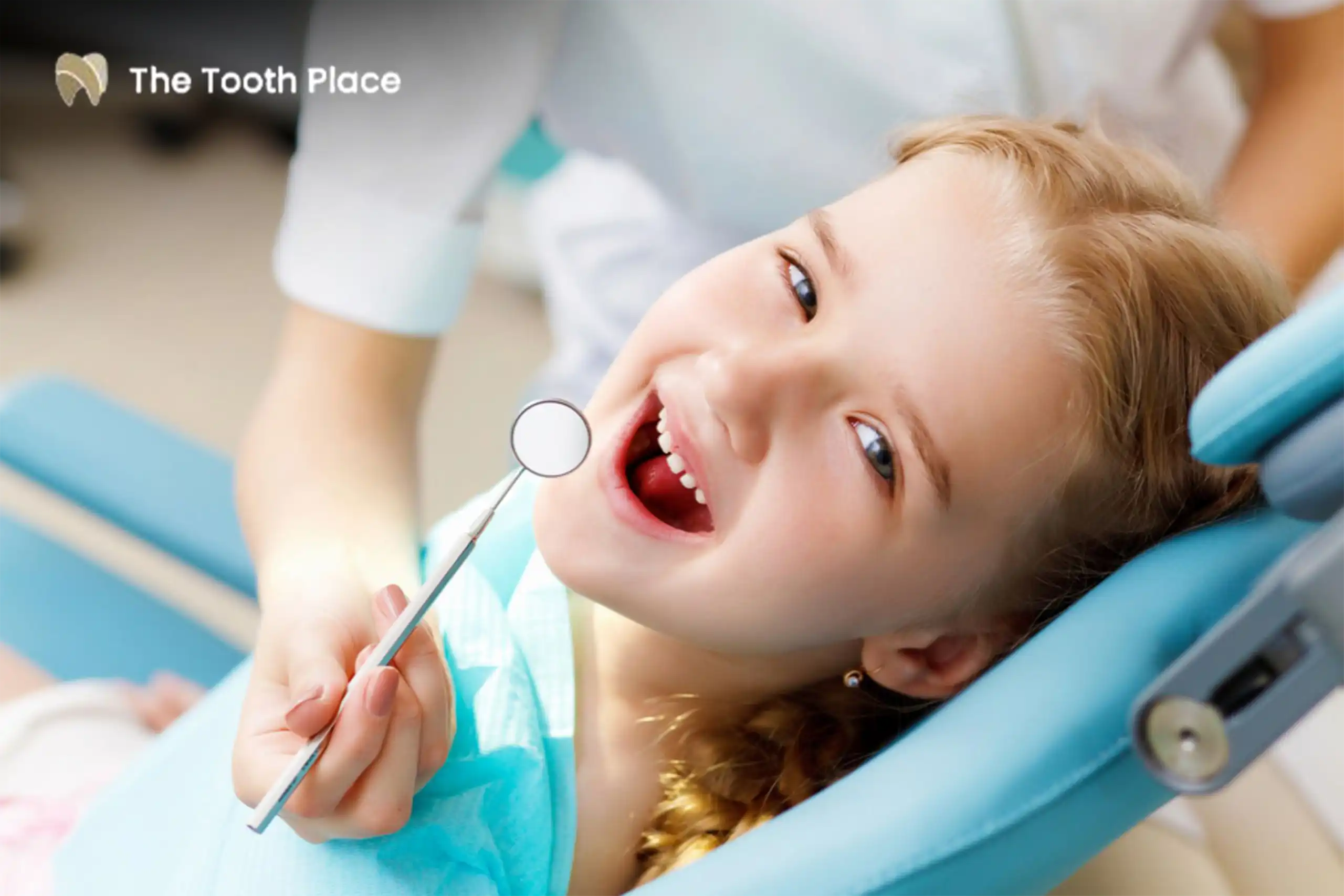
- We start with a gentle look at your child’s gums, teeth and jaw. We check the teeth that have come in and how the jaw is developing.
- For babies, we use the knee-to-knee position. You sit facing the dentist with your baby on your lap, and your baby lies back between you for a quick, comfortable exam.
- Next, we show you how to brush the teeth that have come in. It’s a short, friendly introduction that helps your child get used to a toothbrush.
- According to HealthLinkBC guidelines, a rice-sized smear of fluoride toothpaste should be used to brush the teeth of a toddler under 3 years of age. At three years of age, they should use a pea-sized amount of toothpaste. In case your little one is at a higher risk of getting cavities, our specialists may offer them fluoride treatment.
- Then we talk. We explain what we saw, answer your questions and give you advice that fits your child’s age, from brushing and diet to bottle and soother habits. We also tell you what to watch for at home between visits.
- We also chat about teething, feeding and how you clean your child’s teeth at home.
- The visit usually takes 20 to 30 minutes. Most babies and toddlers handle it well. Nonetheless, some may cry, and that’s completely normal. As a renowned dentist in Bolton, our goal is to make the experience as calm and positive as possible.
When Should a Child First See a Dentist If They're 3 or Older?
- If you’re wondering when should a child first see a dentist at the age of 3 or older, here’s what you can typically expect during the visit:
- Our complete checkup looks closely at your child’s teeth, gums, bite, and jaw. We watch how new teeth come in, check the spacing, and catch any early signs of decay or developmental issues before they become real problems.
- When needed, we use quick, kid-sized dental X-rays. These reveal hidden issues between teeth and under the gums that a normal visual exam misses. We only take them if your child feels comfortable and ready.
- We use a special electric toothbrush and polishing paste to give your child’s teeth a fresh, deep clean. Most kids love this part because it feels a bit ticklish and unique compared to brushing at home.
- We quickly paint a protective layer of fluoride varnish on their teeth to strengthen enamel and block cavities. It takes just 30 seconds and comes in fun flavours like bubblegum and watermelon.
- We will sit down to explain our findings and discuss anything that needs a watchful eye. It is your perfect chance to ask us anything. We can chat about your child’s brushing habits, diet, or how to keep their smile healthy at home.
How to Prepare Your Child for the Dentist?
- Book when your child is usually rested and fed, and avoid nap time. This way, the kid will be less cranky. They can also observe and absorb the clinic environment easily.
- Talk in a positive manner about the dentist. Tell your child the dentist will count their teeth and make them clean and sparkly.
- Use simple, positive words and avoid words like “hurt,” “needle,” or “shot” that may create unnecessary worry.
- Read a dental picture book together. Such books make visiting the dentist idea familiar.
- At home, take turns being the dentist. Count each other’s teeth with a toothbrush, then count a teddy bear’s. This way, a real dentist will feel less alien to your little one.
- Treat the visit as a normal part of growing up rather than making it a big event.
- Plan something fun after the appointment. This gives your kid something fun and positive to look forward to.
- Bring a comfort item like your baby’s favourite toy. This will help your child feel more at ease. A comforting soft toy is always welcome at The Tooth Place.
You can also take a tour of our office together before the visit.
What to Bring to Your Child's Appointment?
Pack these:
- Your child’s health card and any dental insurance or CDCP details
- A list of medications, allergies and medical conditions
- A favourite toy or comfort blanket
- A snack and drink for after the visit
- Your questions, written down, so nothing gets forgotten in the moment
Common Parent Worries and How We Handle Them
“What about the crying?” Crying is an important part of a baby’s nature. In fact, crying is the first indication of a baby’s teething. It also gives a clear view inside the mouth.
“What if the child feels anxious?” We do everything slowly and in a way that works for the child. We don’t proceed with the appointment until the child seems ready.
“What about X-rays?” X-rays are only necessary in a few specific situations. Some digital X-ray equipment works with very low dosage.
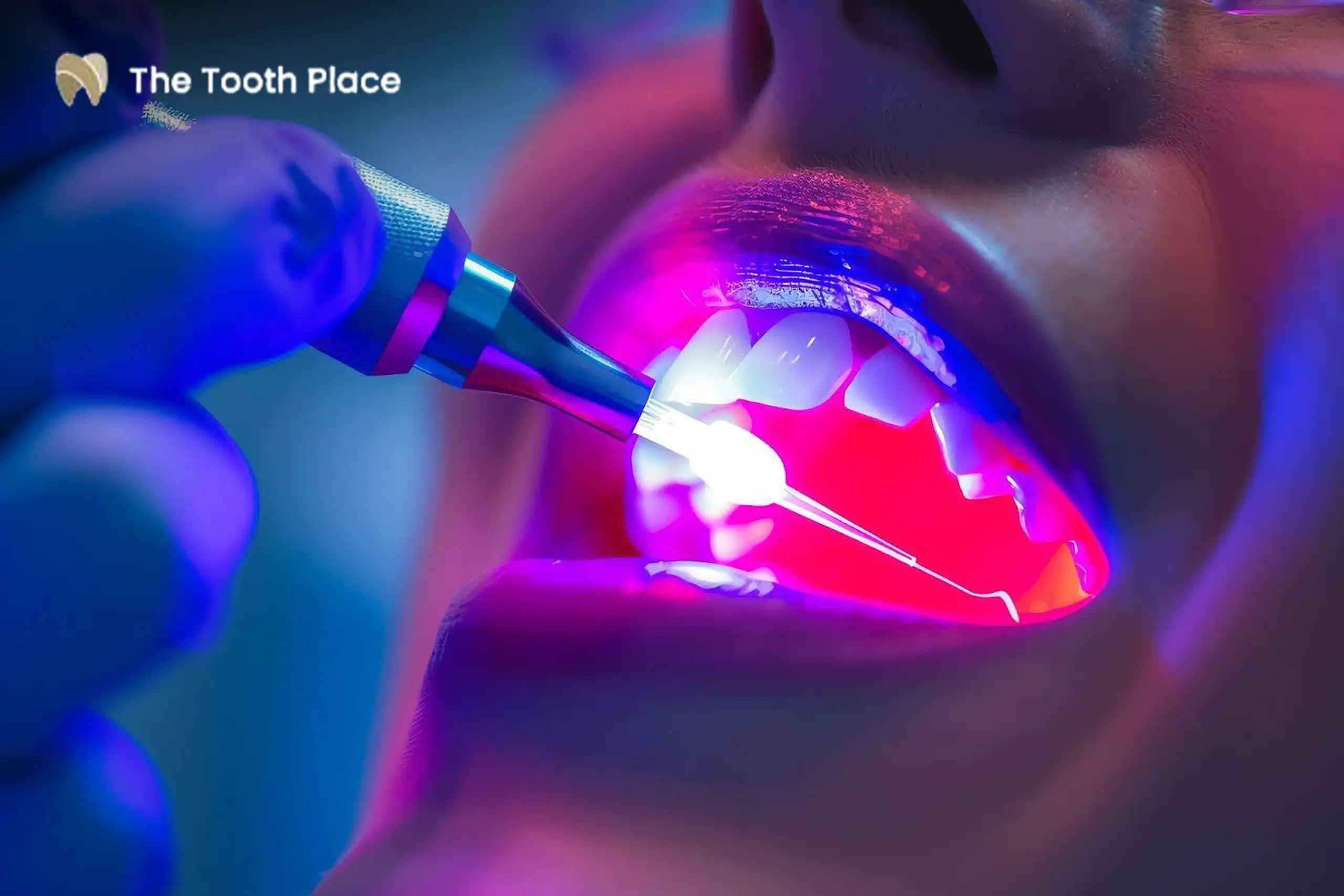
“What if treatment is required?” The treatments are easier and better than parents might expect. Depending upon the situation, laser dentistry for children might also be advised.
How Often Should Kids See the Dentist After the First Visit?
It is essential for a child to get dental check-ups every six months. If there is a concern for cavities, further check-ups can be scheduled in order to prevent any damage that could occur due to cavities. Based on the need for fluoride or sealants, a certain continuum of appointments may be pursued as well. By the age of seven, however, the first permanent teeth and jaw growth are being investigated as kids become more prone to dental issues like overcrowding or malocclusion.
Also Read: How to Choose the Right Dentist in Bolton: 10 Things to Consider
Healthy Habits at Home: Brushing, Bottles and Snacks
Brushing- twice a day, every day, and bedtime counts most. Your child can’t do a good job alone yet, so you hold the brush. Keep doing it until they can tie their own shoes. That’s about when their hands get steady enough.
Bottles- don’t let your baby fall asleep with milk, formula or juice. The liquid sits on the teeth all night, and that’s one of the biggest causes of early decay. Start moving to a cup around the first birthday.
Snacks- think about how often your child eats, not just what. If they graze all day, their teeth stay under acid attack from morning to night. Give water between meals, and keep sweet treats for mealtimes.
Lead by example- brush with your child. When they see you do it, brushing stops feeling like a fight and becomes part of the day.
Also Read: How to Find the Best Dentist in Bolton for Your Family
Book Your Child's First Visit With The Tooth Place in Bolton
Now that you know “when should a child first see a dentist,” you must get ready for a start. Book their first visit at The Tooth Place in the Bolton Medical Centre, where our kids dentist in Bolton team keeps it short, gentle and fun. Call (905) 857-1791 or contact us online.
Frequently Asked Questions
1. At what age should a child first see the dentist?
Book a visit within six months of your child's first tooth, or by their first birthday. The Canadian Dental Association recommends this timing. If your child is older and has not been yet, book now. It's never too late.
2. How long does a child's first dental visit take?
A first visit takes about 20 to 30 minutes. We keep the visit short, calm, and relaxed. Our team moves at your child's pace, so your child leaves feeling good about the dentist and ready to come back.
3. Will my child need X-rays at the first visit
In the vast majority of cases, the answer is no. We do not use X-rays unless we need to see something specific, like a cavity or a problem. Our digital X-rays are low dose, and hardly ever necessary for this age.
4. What if my child cries during the visit?
Crying is common in infants, and we deal with it appropriately. We keep the visit short, and we do not force a scared child into the complete appointment. Actually, crying is sometimes useful since it allows us to see the child's teeth better.
5. Can I stay with my child during the appointment?
Absolutely. We advise that parents remain with their little ones. The examination is performed while the baby is lying on the parent’s lap so that the baby will be able to see their parent the whole time.
6. Are cavities in primary teeth serious?
Definitely. Tooth decay in baby teeth leads to pain, infection, difficulty eating, and can also affect how the adult teeth develop.
7. How much toothpaste should I use for my toddler?
For kids less than 3 years of age, you should use a toothpaste smear the size of a grain of rice. A pea-sized amount of toothpaste is enough for children above three years. Brush twice a day with special emphasis on bedtime brushing.
8. Does the Canadian Dental Care Plan cover children's dental visits?
Your child might qualify for the CDCP program if your annual income qualifies and there is no private dental coverage. To make sure your child qualifies, arrange for an appointment with a CDCP Dentist by calling us.