A crown on a baby tooth protects a tooth that’s too damaged for a filling, so it can stay in place until the adult tooth is ready. Some baby molars don’t fall out until age 12 or 13, which means they need to last for years.
Many parents are surprised when a dentist suggests a crown for a child. “Isn’t it going to fall out anyway?” is one of the most common questions parents ask, and it’s a fair one.
This guide explains why baby teeth matter, when a crown is the right choice, the different types used for children and what the visit looks like. You’ll also find tips to help your child feel calm and to keep their other teeth healthy.
Why Baby Teeth Matter More Than You Think
Baby teeth (also called primary teeth) do far more than help your child eat. According to HealthLinkBC, healthy baby teeth help children eat and speak clearly, and they guide adult teeth into the right position.
Job of baby teeth | What happens if one is lost early |
|---|---|
Chewing food properly | Child may avoid certain foods or chew on one side |
Clear speech | Some sounds can be harder to form |
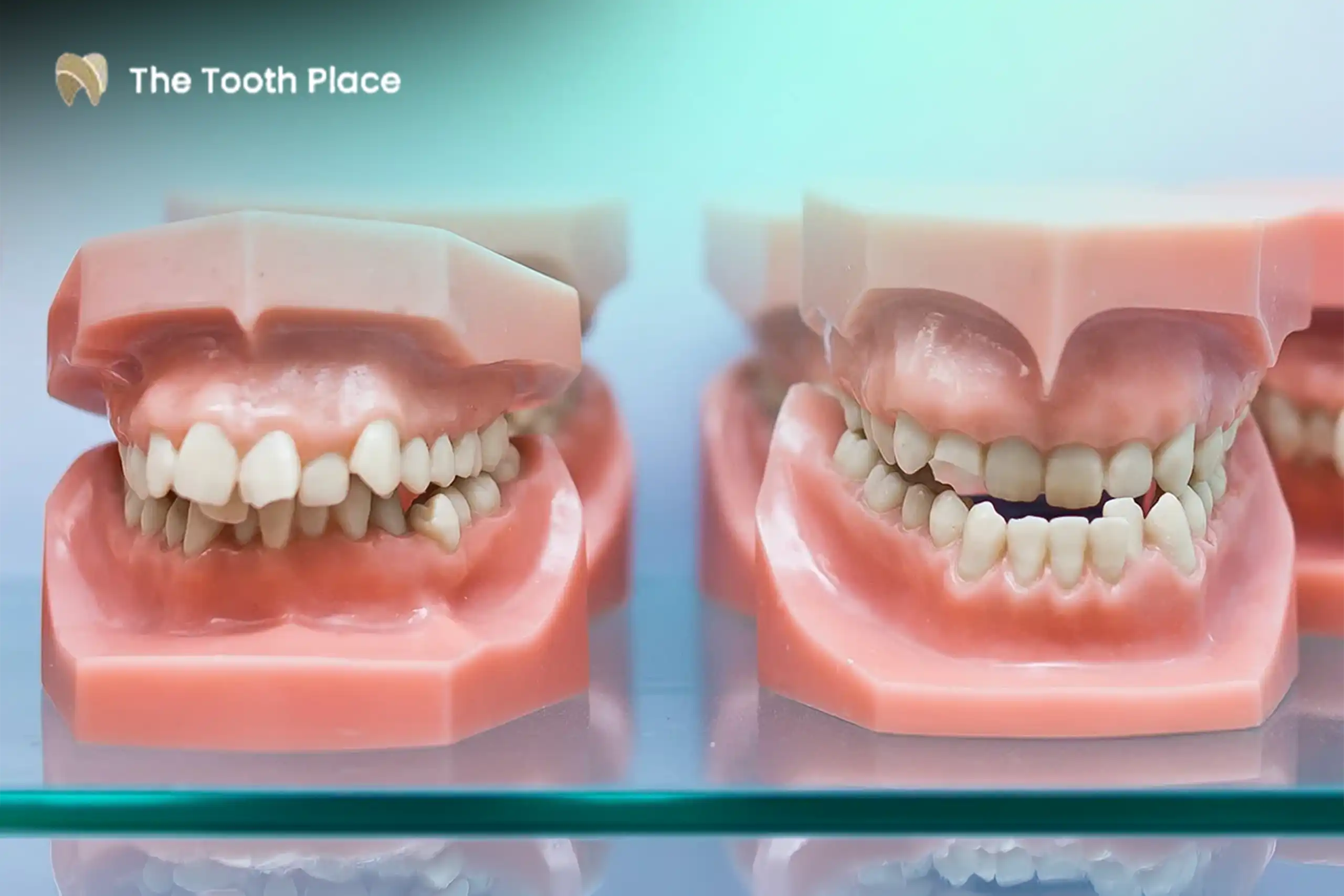
Holding space for adult teeth | Nearby teeth drift, crowding the adult tooth |
Guiding adult teeth into place | Adult teeth may come in crooked |
Confidence and comfort | Pain and infection affect sleep, eating and school |
An untreated cavity in a baby tooth can also mean pain, poor sleep and missed days at school or daycare.
Baby Tooth Eruption and Loss Timeline
Not all baby teeth fall out at the same age. The back molars, which most often need crowns, stay the longest.
Baby teeth | Usually come in | Usually fall out |
|---|---|---|
Front teeth (incisors) | 6–12 months | 6–8 years |
Canines | 16–23 months | 9–12 years |
First molars | 13–19 months | 9–11 years |
Second molars | 23–33 months | 10–12 years, sometimes 13 |
A cavity in a three-year-old’s back molar may need to hold up for seven to ten more years. That’s why a lasting repair matters.
When Does a Baby Tooth Need a Crown?
A crown is usually recommended instead of a filling when:
- The cavity is large or touches several surfaces of the tooth
- Decay has spread between two neighbouring teeth
- The tooth has had a pulpotomy (a “baby root canal”)
- The enamel didn’t form properly and breaks down easily
- A tooth is broken from a fall or injury
- A child has a high risk of new cavities, and a filling would likely fail
Fillings in baby molars can work well for small cavities. For large ones, a crown covers the whole tooth and protects every surface from new decay.
Also Read: Your Child’s First Dental Visit: When to Go and What to Expect
Types of Crowns for Children
Crown type | Colour | Used for | Key points |
|---|---|---|---|
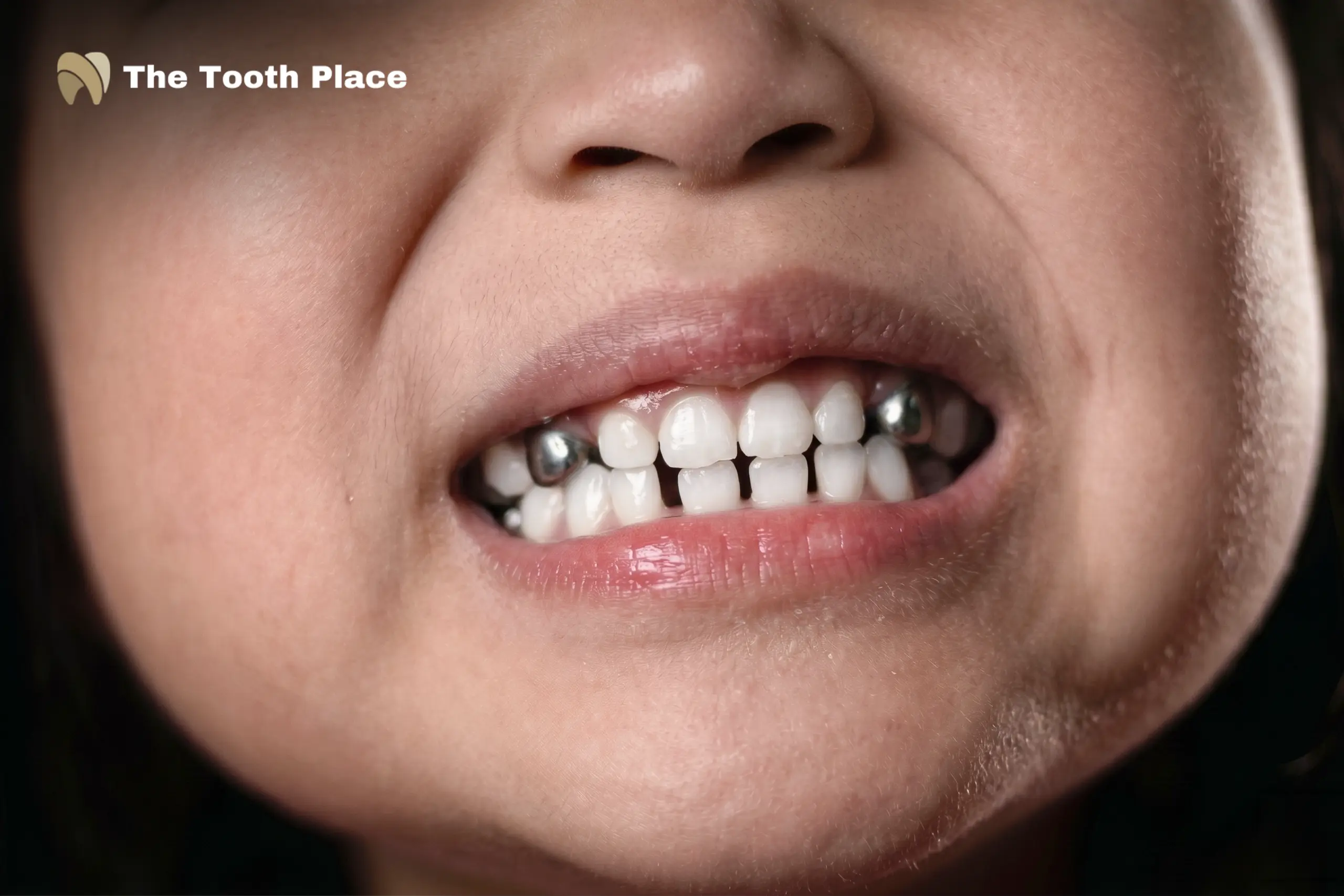
Stainless steel crown | Silver | Back molars | Very durable, quick to place, falls out with the baby tooth |
Zirconia crown | Tooth-coloured | Front and back teeth | Natural look, strong, needs more tooth shaping and a dry field |
Composite strip crown | Tooth-coloured | Front teeth | Built from filling material, good looks, less durable for heavy damage |
Pre-veneered steel crown | White front, steel inside | Front teeth | Tooth-coloured face with steel strength; facing can chip |
Stainless Steel Crowns
These are the most common crowns for baby molars. They come pre-made in many sizes and are fitted and cemented in a single visit. Children sometimes call them “silver teeth” or “robot teeth”.
Stainless steel crowns contain nickel and chromium. If your child has a known nickel allergy, tell your dentist so another option can be chosen.
Zirconia Crowns
Zirconia crowns look like natural teeth, which many parents prefer for front teeth. They need the tooth to be shaped a little more and kept very dry while placed, so they suit children who can sit still comfortably.
The Hall Technique
The Hall Technique is a gentler way to place a stainless steel crown on a decayed baby molar. Instead of drilling out decay, the dentist seals it under the crown, which cuts off the bacteria’s food supply and stops the cavity growing.
Benefits include:
- Usually no needle or freezing
- No drilling of the tooth
- A fast appointment, often only a few minutes per tooth
- A good option for young or anxious children
A small rubber spacer may be placed between teeth a few days before, to make room for the crown. Not every tooth is suitable; if there are signs of infection, a different approach is needed.
What Happens at the Appointment
Every child and every tooth is different, but a typical crown visit looks like this:
- Comfort first. The dentist explains each step in child-friendly words.
- Numbing, if needed. A topical gel, then local anaesthetic for most methods except the Hall Technique.
- Removing decay. Decay is cleaned out, or sealed in with the Hall Technique.
- Nerve treatment, if needed. A pulpotomy may be done if decay reaches the nerve.
- Fitting the crown. The right size is chosen and cemented in place.
- Bite check. The dentist makes sure your child bites comfortably.
Most crown appointments for children are completed in one visit. For a child with many cavities or strong dental anxiety, your dentist may talk with you about sedation options, sometimes provided by a sedation dentist in Bolton or through referral.
Aftercare: What to Expect at Home
What you may notice | What’s normal | When to call us |
|---|---|---|
Gum around the crown looks white or pink | Normal for a day or two | Swelling or pus |
Bite feels “high” or strange | Settles within a few days | Still uncomfortable after a week |
Mild soreness | Children’s pain relief as directed on the package | Pain that gets worse |
Numb lip or cheek | Wears off in a few hours | Watch that your child doesn’t bite it |
Crown feels loose or comes off | Not expected | Call right away and keep the crown |
Brush the crown just like a natural tooth, twice a day with fluoride toothpaste, and floss around it. Avoid sticky candies, which can pull a crown loose.
Also Read: How to Find the Best Dentist in Bolton for Your Family
How Long Do Crowns on Baby Teeth Last?
A well-placed stainless steel crown usually lasts until the baby tooth falls out naturally. The crown and tooth come out together, and the adult tooth comes in underneath.
Zirconia and composite crowns also aim to last the life of the tooth, though composite crowns on front teeth can chip with heavy biting or falls.
What Happens If a Damaged Baby Tooth Isn't Treated?
Skipping treatment can lead to:
- Toothache that disturbs sleep and eating
- Infection and facial swelling
- Damage to the adult tooth forming underneath
- Early loss of the baby tooth and loss of space
- Treatment later that’s more involved, such as extraction and a space maintainer
If a baby tooth is lost too early, a space maintainer may be needed to hold the gap. Without one, children may later need more teeth alignment treatment in Bolton to correct crowding.
How to Prevent the Need for More Crowns
- Brush your child’s teeth twice a day until they can do it well alone, often around age 7 or 8.
- Under age 3, ask your dentist whether your child is at risk of cavities; if so, brush with a rice-grain-sized smear of fluoride toothpaste. From age 3, use a pea-sized amount.
- Floss once teeth touch each other.
- Keep juice, pop and sticky snacks to mealtimes.
- Don’t put your child to bed with a bottle of milk or juice.
- Ask about sealants and fluoride treatment in Bolton at checkups.
- Book a checkup every six months, or as your dentist recommends.
Coverage for Children's Crowns
Many private dental plans cover crowns for children, sometimes as basic rather than major care. Eligible children may also be covered through Healthy Smiles Ontario or the Canadian Dental Care Plan.
Our team can help you check what your plan pays before treatment. As a CDCP dentist in Bolton, we can also explain how federal coverage applies to your child.
Gentle Care for Kids at The Tooth Place
At The Tooth Place, we take time to explain treatment to both you and your child. We use simple language, go at your child’s pace and show you exactly what we see in their mouth.
Learn more about our dental crowns for children in Bolton, or book a visit with our team.
Frequently Asked Questions
1. Why put a crown on a baby tooth that will fall out?
Some baby molars stay until age 12 or 13. A crown protects a badly damaged tooth so it can keep holding space for the adult tooth and let your child chew without pain.
2. Do crowns on baby teeth hurt?
Your child's tooth is usually numbed first, so the procedure shouldn't hurt. With the Hall Technique, many children need no needle at all. Mild soreness afterwards is common.
3. How long do crowns on baby teeth last?
A stainless steel crown usually lasts until the baby tooth falls out naturally. The crown and tooth then come out together.
4. What is the Hall Technique?
It's a way of placing a stainless steel crown over a decayed baby molar without drilling or, usually, freezing. Sealing the decay under the crown stops it from growing.
5. Are silver crowns safe for kids?
Stainless steel crowns have been used in children for decades. They contain nickel, so tell your dentist if your child has a nickel allergy.
6. Can my child get a white crown instead of a silver one?
Often, yes. Zirconia and composite crowns are tooth-coloured. Your dentist will explain which type suits the tooth and your child.
7. What if the crown falls off?
Keep the crown and call your dentist promptly. It can often be re-cemented, but the tooth should be checked soon.
8. Does insurance cover crowns for children?
Many plans do, and eligible children may be covered through Healthy Smiles Ontario or CDCP. Our team can check your coverage before treatment.